
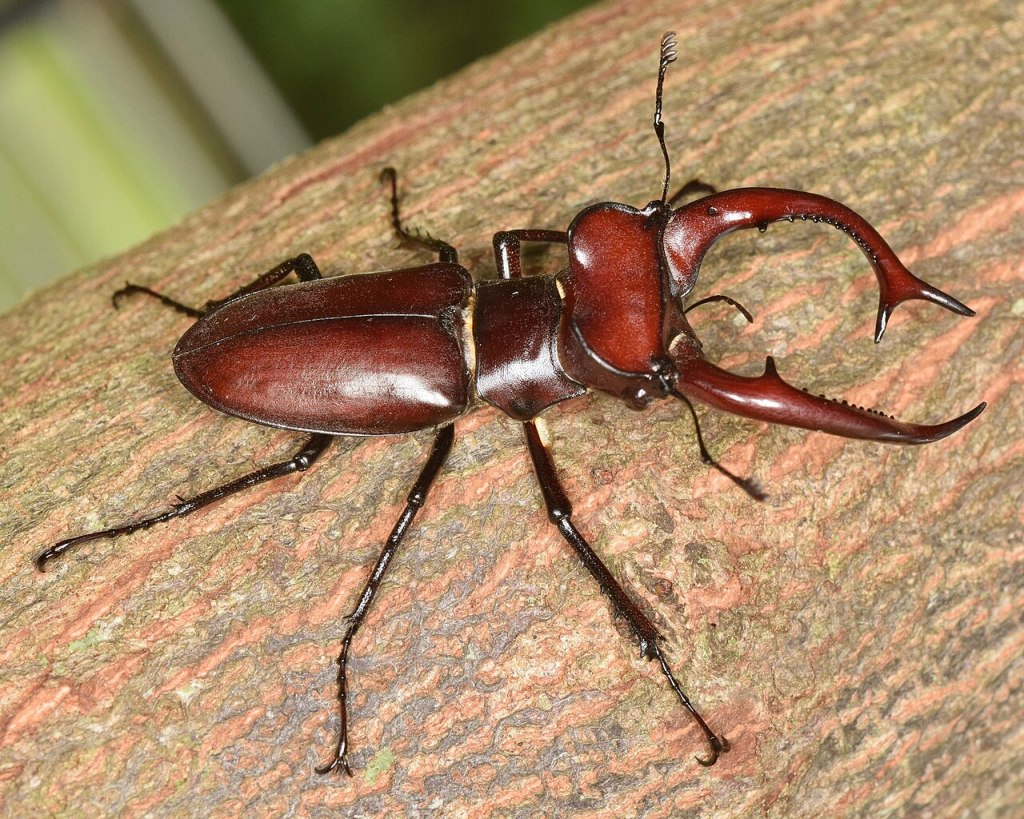
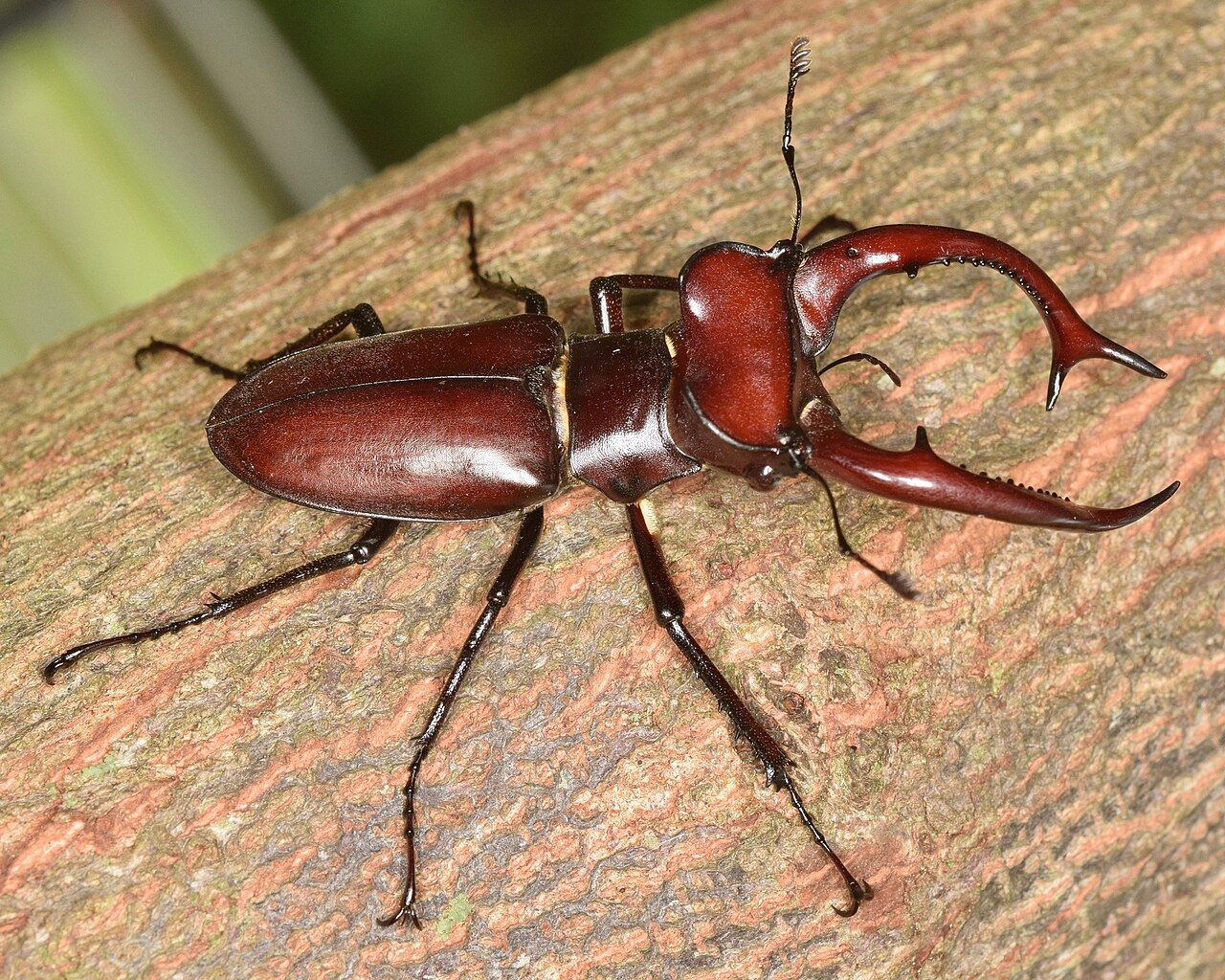
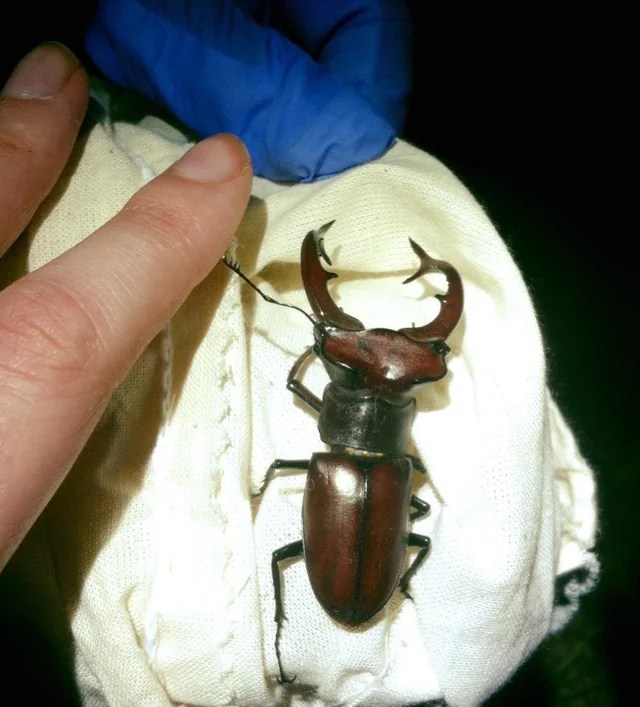
Lucanus elaphus, known commonly as the giant stag beetle or elk stag beetle, is one of the most recognizable and largest insects native to eastern North America. A member of the family Lucanidae, this impressive beetle is frequently sought after by entomologists and collectors due to its dramatic size and antler-like mandibles.
Identification & Morphology
The species exhibits significant sexual dimorphism, meaning males and females look markedly different.
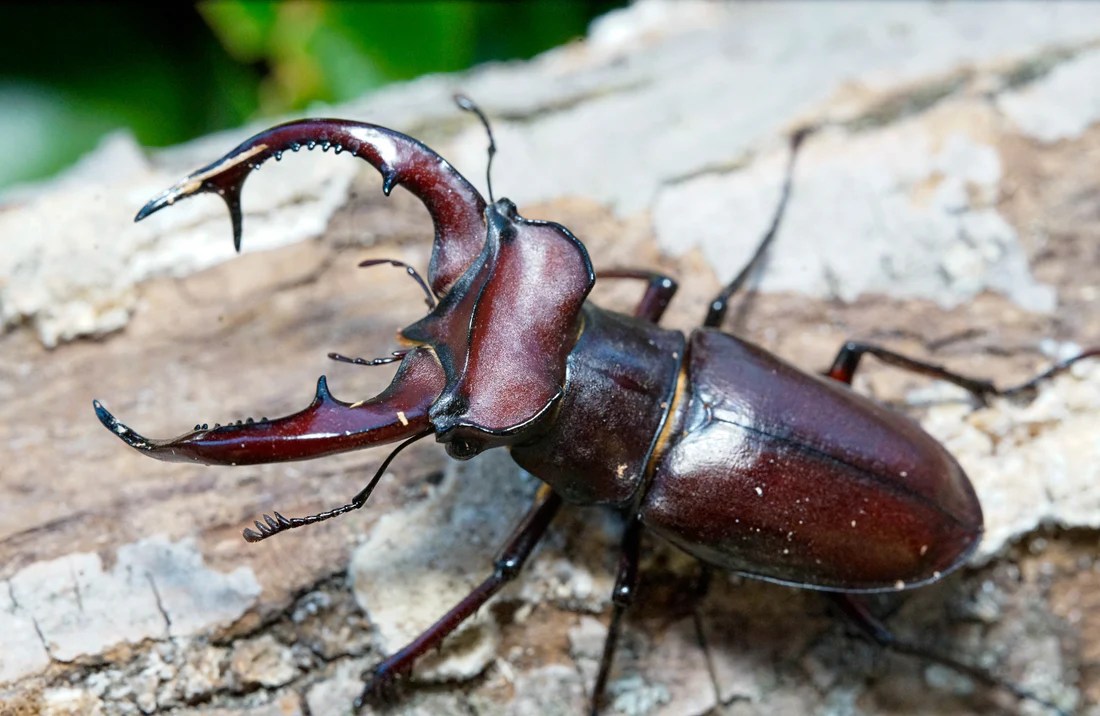
- Males: Can reach lengths of 45–68 mm (nearly 2.5 inches) including their mandibles. Their most striking feature is a pair of oversized, branched mandibles that resemble the antlers of a stag—the source of both their common and scientific names (elaphus is Greek for “deer”).
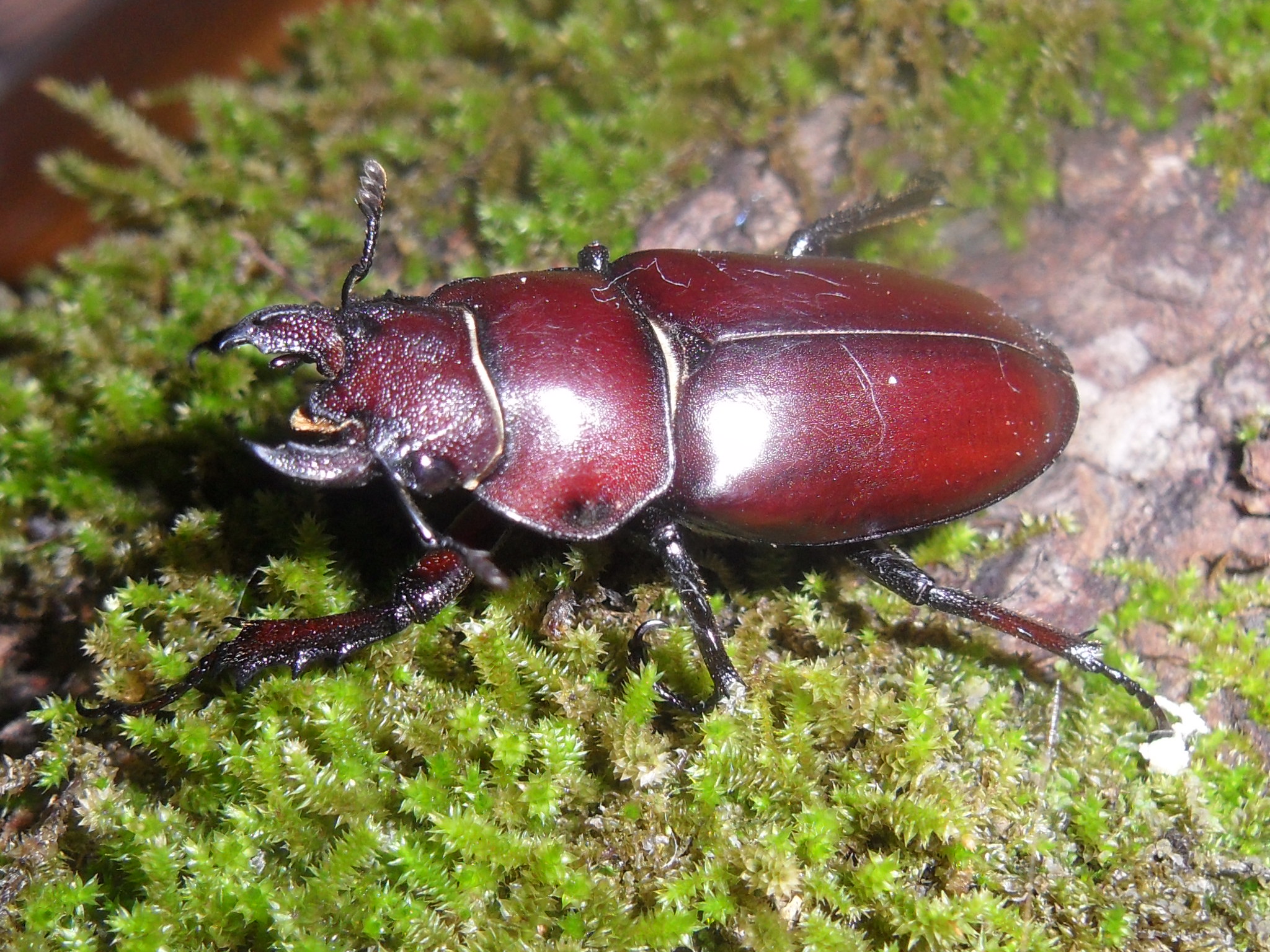
- Females: Smaller than males, typically measuring 28–35 mm. They lack the elongated “antlers,” possessing instead shorter, more functional mandibles. They are generally darker in appearance with a smoother thorax shield.
- Coloration: Both sexes are a shiny, reddish-brown, often appearing darker on the head and thorax, with black legs and antennae.
Range & Habitat
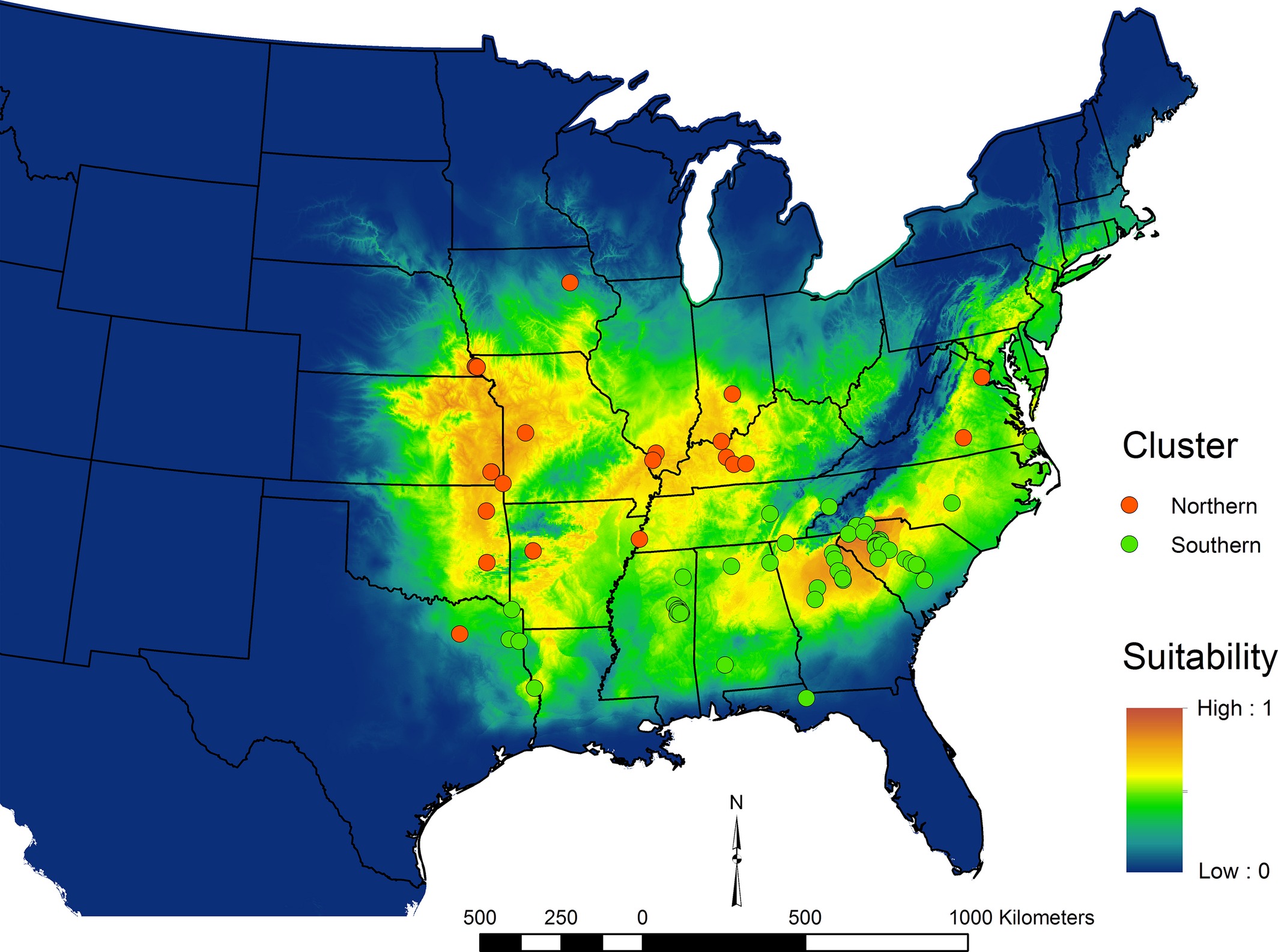
Lucanus elaphus is primarily distributed across the eastern and central United States, with a range extending from Virginia and North Carolina west to Oklahoma and north into the northeastern states.
They are saproxylic, meaning they rely on dead or decaying wood for their development. You are most likely to encounter them in deciduous forests where there is an abundance of rotting logs, stumps, and damp, decomposing trees. Adults are often attracted to lights at night and may be found on porches or under streetlights during their active season in early summer.
Life Cycle & Biology
The life cycle of the giant stag beetle is long and subterranean, contrasting sharply with the short, frantic life of the adult.
- Egg: Females deposit eggs into cracks in damp, rotting wood.
- Larva: Upon hatching, the “C-shaped” grubs tunnel into the decaying wood, consuming it for sustenance. This stage is the longest, typically lasting 1 to 2 years as the larvae grow.
- Pupation: When mature, the larva creates a pupal cell within the wood or surrounding soil, remaining there for several months before emerging as an adult.
- Adult: Once they emerge, adults live for only a few months—just long enough to mate. They do not chew solid food; instead, they sustain themselves on liquid sugars, such as tree sap, rotting fruit juices, and aphid honeydew.
Behavior & Interaction
- Territoriality: Males are notoriously territorial. During the breeding season, they use their mandibles to wrestle rival males, attempting to flip them over or knock them off logs to secure mating access to females.
- Handling: While their size can be intimidating, they are generally harmless to humans. However, if provoked, a large male can deliver a painful pinch with its mandibles, and females have stronger biting force relative to their size.
- Conservation: The species is considered “Apparently Secure” and is not listed as endangered or in need of special federal protection. Their presence is a sign of a healthy forest ecosystem with sufficient decaying wood to support their multi-year larval development.



Leave a comment