
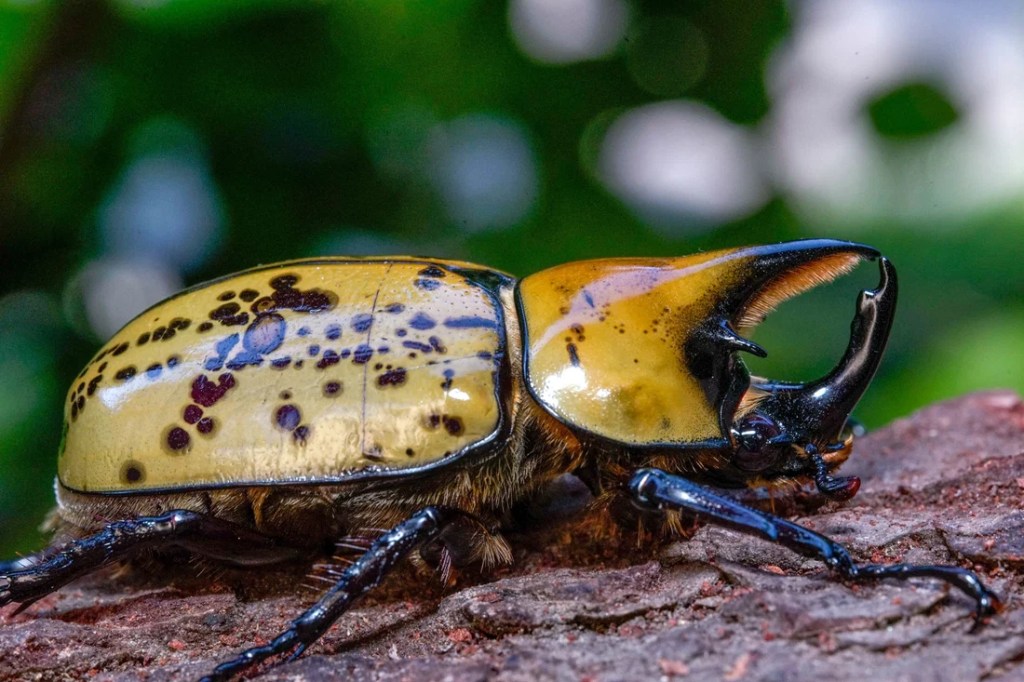
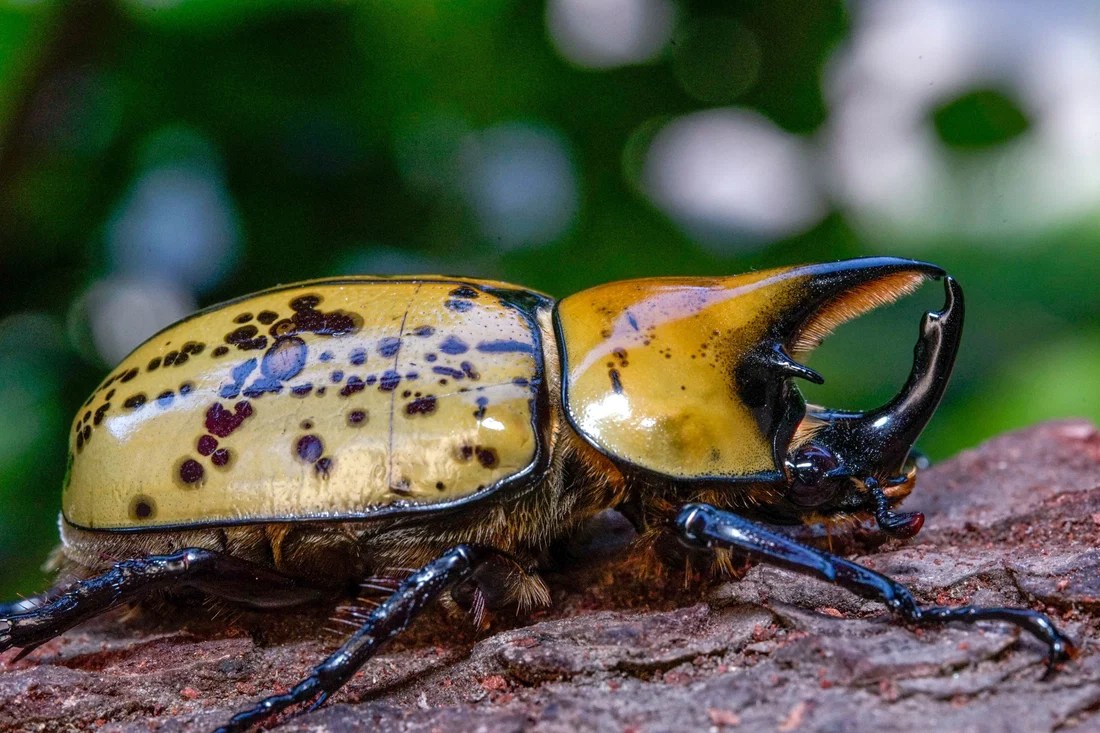
The Eastern Hercules beetle (Dynastes tityus) is one of the most recognizable and largest insects in the United States. A member of the rhinoceros beetle subfamily (Dynastinae), it is celebrated for its impressive size, distinct appearance, and critical role in forest health as a natural recycler.
Physical Characteristics
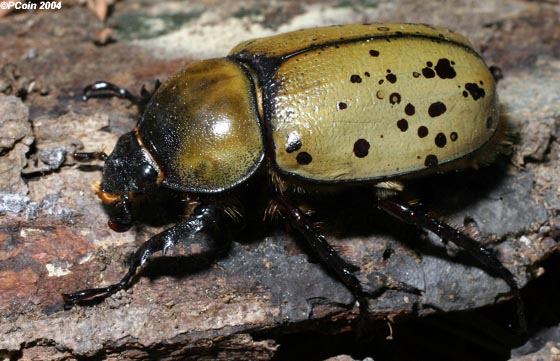
The Eastern Hercules beetle displays clear sexual dimorphism, meaning males and females look significantly different.
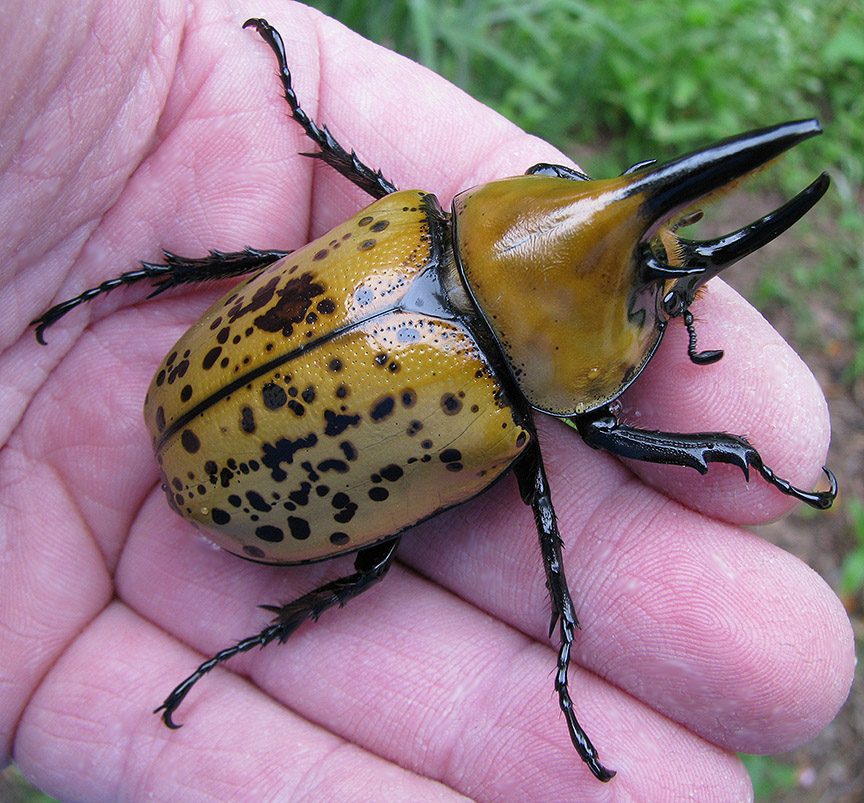
- Size: Adults generally measure between 35 and 70 mm (approximately 1.5 to 3 inches) in length.
- Males: Characterized by two large horns—one projecting from the head and one from the thorax (pronotum). These horns are used primarily for competition with other males during mating season.
- Females: Lack horns entirely and are typically slightly smaller than males.
- Coloration: Their bodies (elytra and thorax) range from greenish-gray to tan with variable black spots. Interestingly, their color can shift based on environmental humidity; higher moisture levels often cause the beetle to appear darker brown, as the porous cuticle absorbs water.
Life Cycle
The lifecycle of D. tityus is complex and primarily subterranean, often taking one to two years to complete.
- Egg: Females lay roughly 20–100 eggs in decaying wood or nutrient-rich soil cavities near rotting logs.
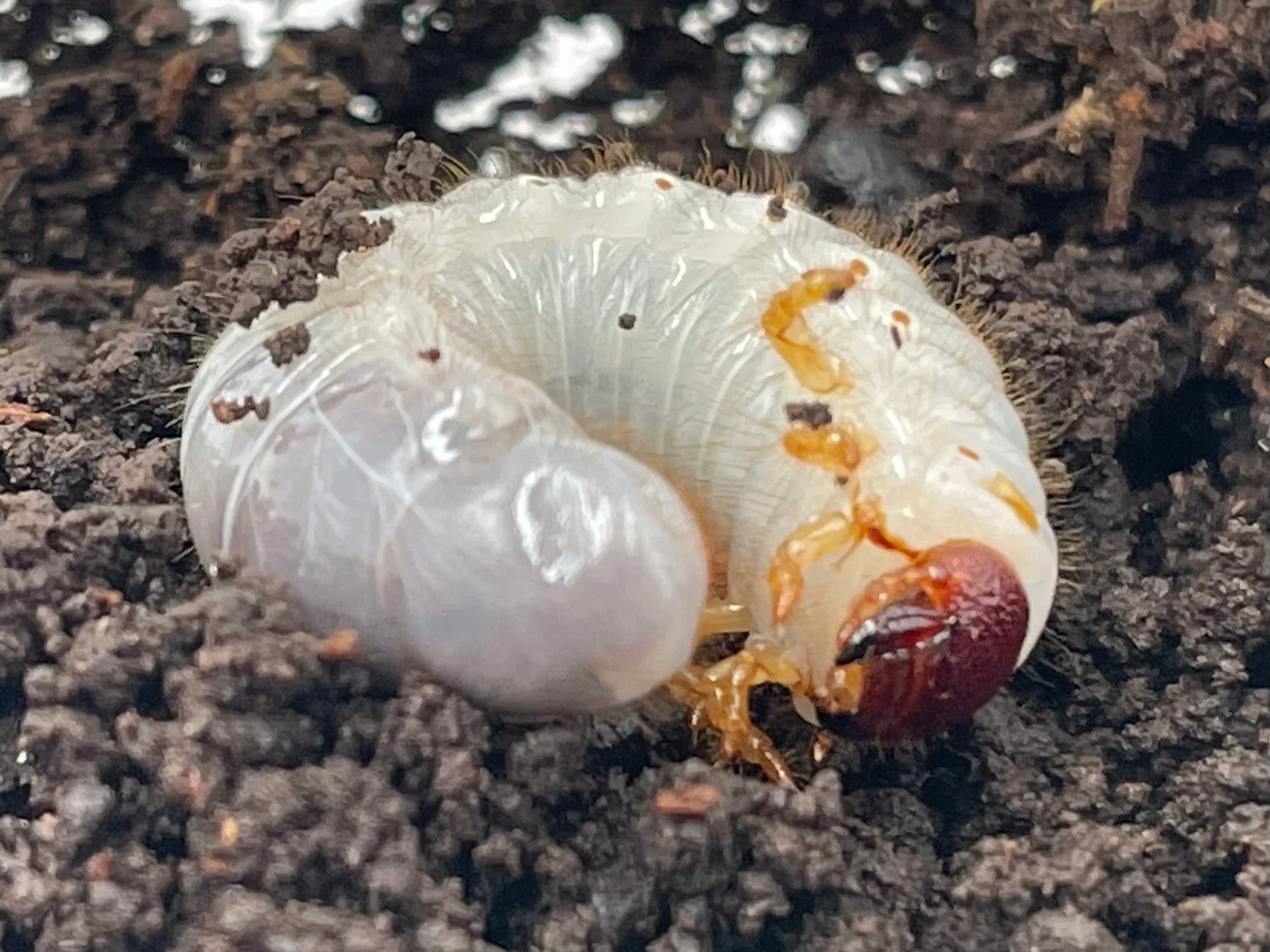
- Larva: The larvae are large, C-shaped white grubs with brown heads. They are saproxylophagous, meaning they feed exclusively on decaying hardwood. They progress through three growth stages (instars) before pupating.
- Pupa: During late summer, the larva constructs a chamber of frass (excrement) and wood to pupate.
- Adult: After emerging, they may remain in their pupal cell to overwinter, becoming active the following summer. Adults live for 4–6 months once active.
Habitat and Behavior
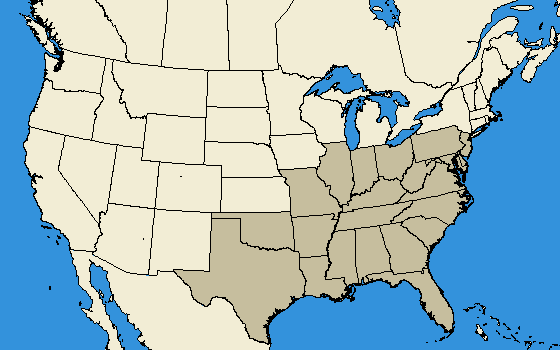
- Range: They are native to the Eastern and Southern United States, ranging from New York south to Florida and west to Texas and Oklahoma.
- Diet: Adults are known to feed on tree sap—often by scraping bark—and rotting fruit. They are nocturnal and frequently attracted to porch lights, which is how many people encounter them.
- Defense: Despite their intimidating horns, they are harmless to humans. If threatened, they may produce a hissing sound or exude a mild, foul-smelling odor to deter predators.
Ecological Importance
Eastern Hercules beetles act as vital decomposers. By consuming rotting wood, they facilitate the breakdown of woody debris, cycling nutrients back into the soil and supporting forest ecosystem health.
However, their populations are sensitive to habitat loss. They require large, standing dead trees or decaying logs to complete their lifecycle; in areas where dead wood is cleared away, these beetles struggle to survive. Additionally, the decline of ash trees—a preferred food source—due to the invasive Emerald Ash Borer has caused concern among entomologists regarding the future stability of D. tityus populations.



Leave a comment